Accessibility ramps provide a safer and more manageable way for people to enter and exit homes, businesses and community spaces. They are most commonly installed for people who use manual or power wheelchairs, but they can also support individuals using mobility scooters, walkers, rollators and other mobility equipment.
For many wheelchair users, a ramp is more than a home improvement. It may be their primary path to medical appointments, work, family activities and the surrounding community. Because the ramp may be used several times every day, choosing the right material is an important decision.
Steel and aluminum can both be used to build strong accessibility ramps. However, they react differently to rain, snow, ice, road salt and changing temperatures. Understanding these differences can help customers make a more informed long-term decision.

Where Are Accessibility Ramps Used?
Accessibility ramps help overcome steps and changes in elevation that may otherwise prevent someone from safely entering or leaving a property.
Common installation areas include:
- Front and side entrances
- Garages
- Porches and decks
- Commercial entrances
- Churches and community buildings
- Schools and healthcare facilities
- Temporary entrances during recovery
Ramps may be needed after an injury, surgery or health diagnosis. They may also be installed as part of a long-term plan to help someone remain independent and age in place.
A properly designed ramp can provide greater independence for wheelchair users while also helping family members and caregivers assist someone without navigating stairs.

Why Ramp Material Matters
An outdoor accessibility ramp must withstand years of moisture, changing temperatures, snow removal and repeated use.
The ramp material can affect:
- Resistance to rust and corrosion
- Maintenance requirements
- Surface condition
- Reliability of handrails and connections
- Ability to expand or reconfigure the ramp
- Removal and transportation costs
- Opportunities for reuse and recycling
- Long-term value
A ramp may look strong and dependable when it is first installed, but its condition several years later can tell a different story.
What Happens When Steel Is Exposed to the Elements?
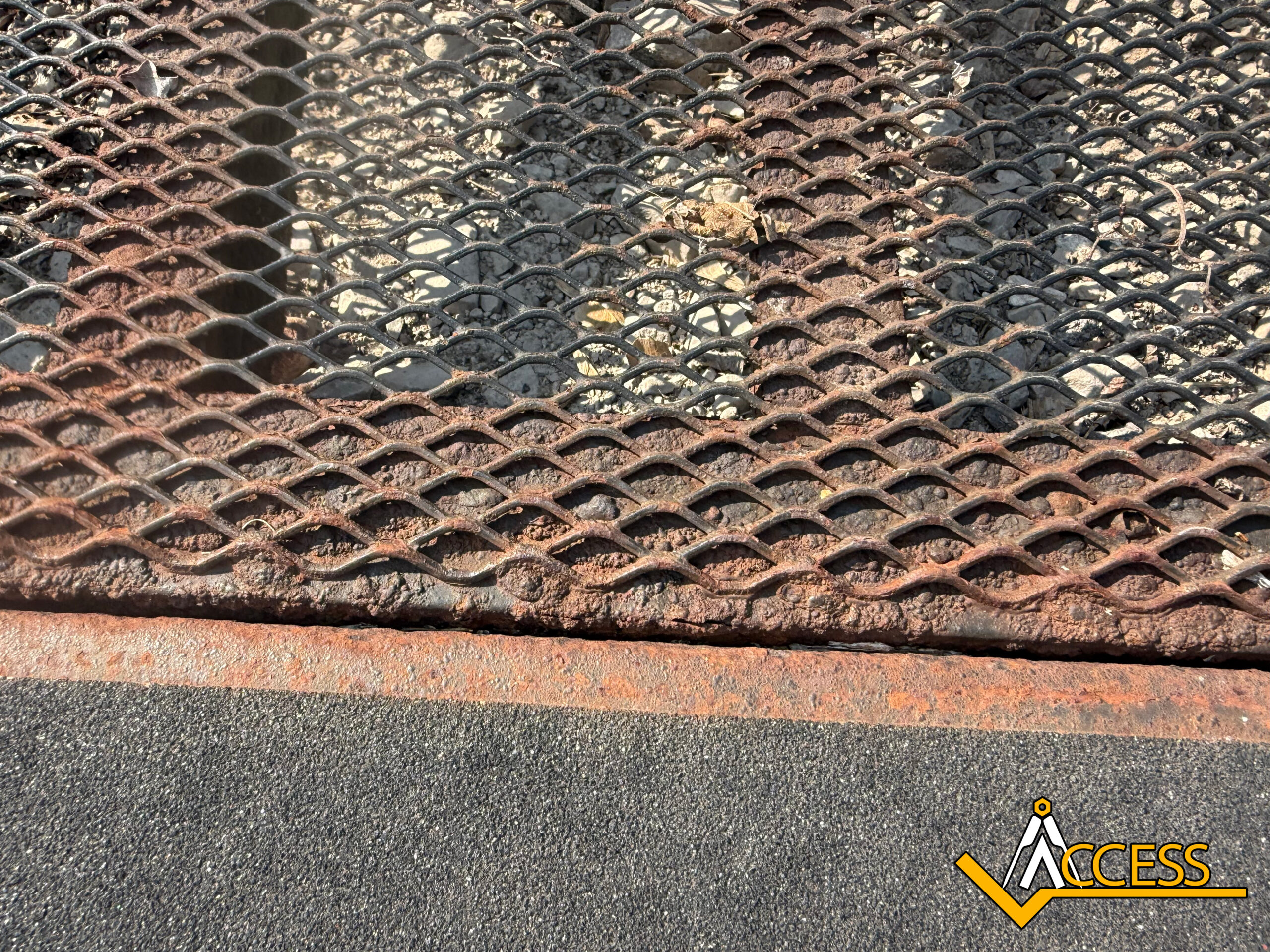
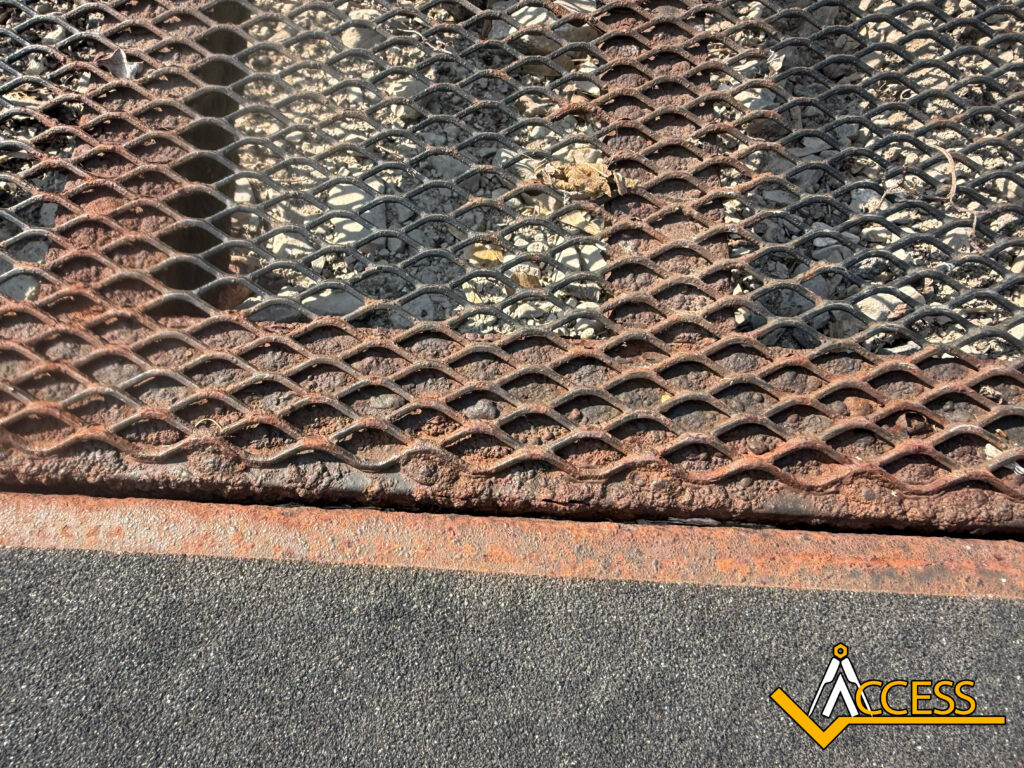
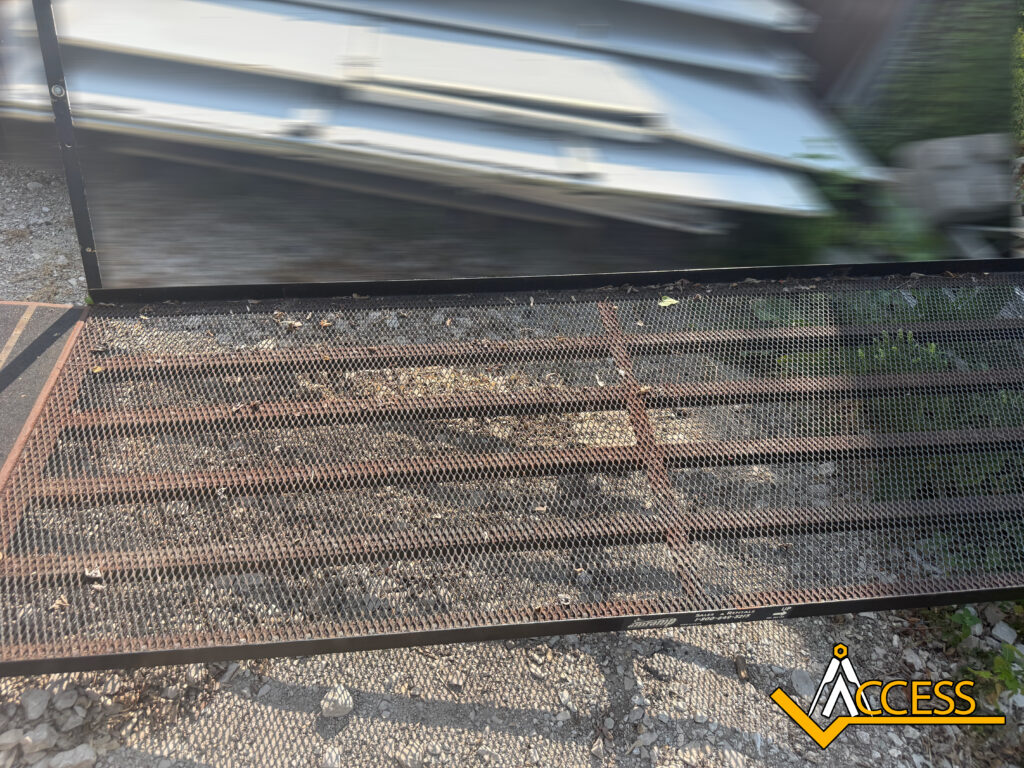
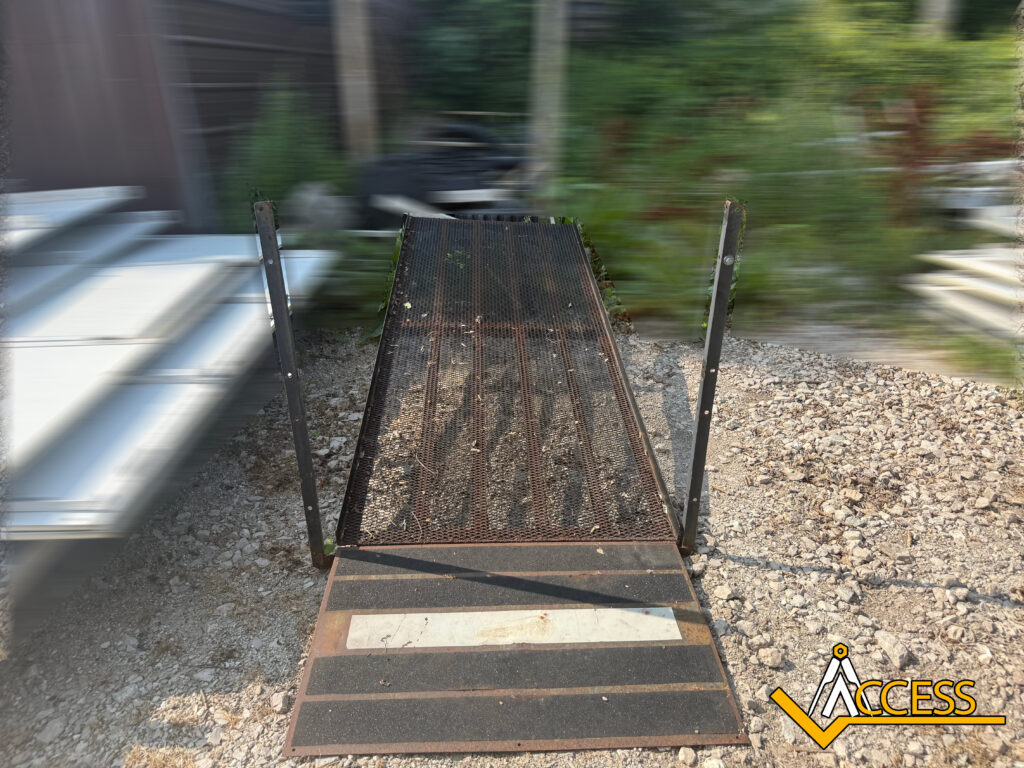
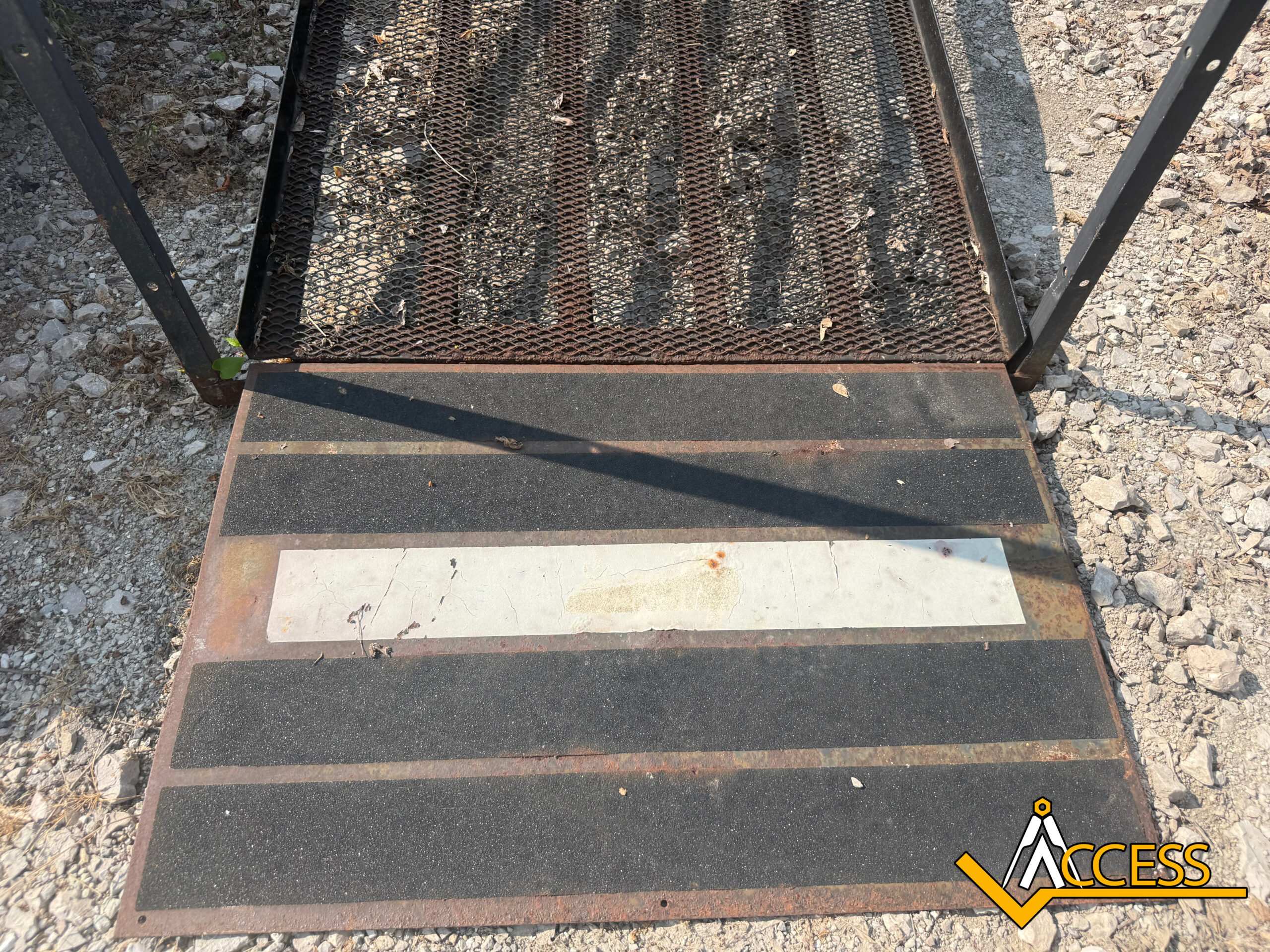
Traditional carbon steel is susceptible to rust. Steel ramps are commonly protected with paint, powder coating, galvanizing or another surface treatment. These coatings help prevent water and oxygen from reaching the underlying steel.
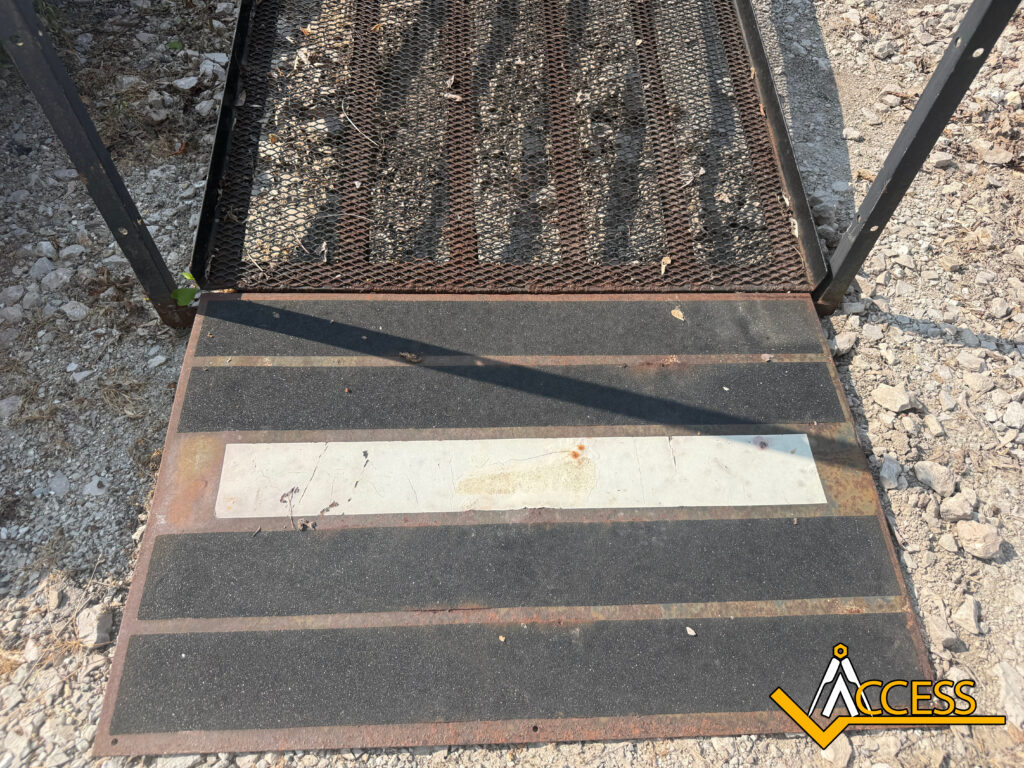
However, if the coating becomes scratched, chipped or worn, the exposed metal may begin to corrode. Road salt and deicing products may accelerate that process.
Rust commonly begins around:
- Welds
- Bolts and fasteners
- Connection points
- Scratches and chipped coatings
- Areas where water collects
- Components positioned close to the ground
Properly manufactured, protected and maintained steel can provide many years of service. It would not be accurate to say that every steel ramp will rust or fail after a specific number of years. The ramp’s environment, finish, installation and maintenance all affect its useful life.
However, unprotected or poorly maintained steel may begin showing corrosion within several years, especially in areas that experience snow, moisture and road salt.

Rust Is More Than an Appearance Issue
Early surface rust may initially appear to be cosmetic. If corrosion continues, however, it can gradually reduce the thickness and strength of steel components.
Warning signs may include:
- Orange or brown discoloration
- Bubbling or peeling paint
- Flaking coatings
- Pitting in the metal
- Deterioration around welds
- Loose or weakened connections
- Sections that flex, sag or feel unstable
- Holes or significant material loss
A rusted ramp should not automatically be described as unsafe without a professional inspection. However, visible deterioration should never be ignored. Severe corrosion may eventually weaken structural components and create a potential safety concern.
This is especially important when the ramp serves as a wheelchair user’s primary entrance.

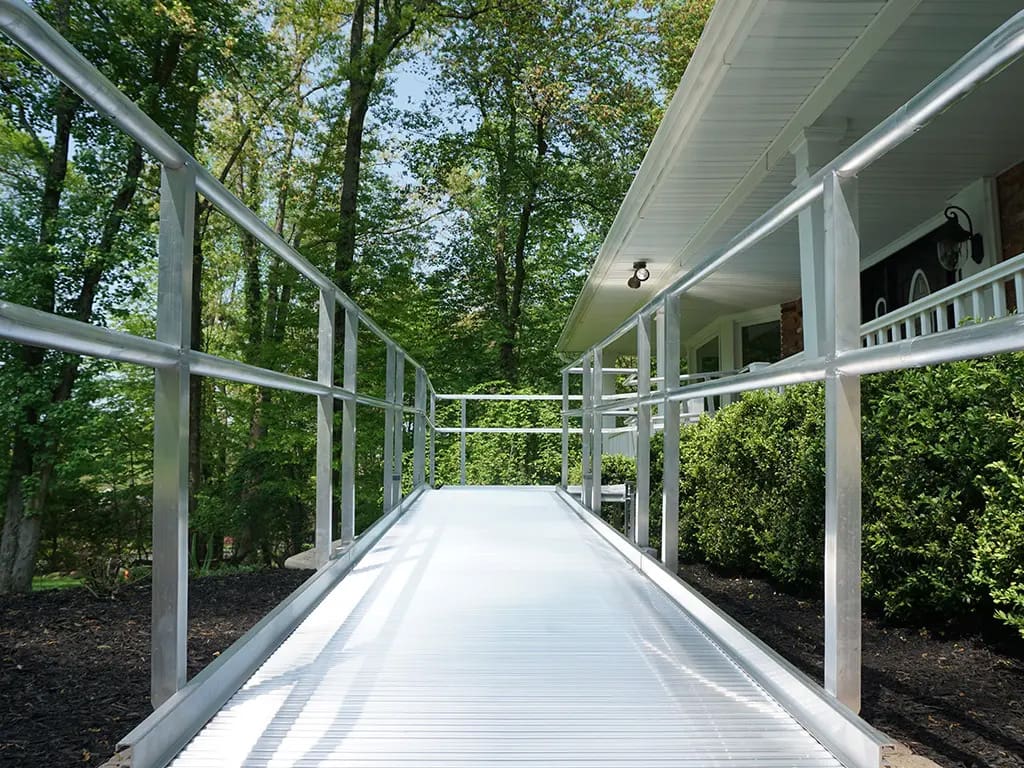
Why Does Aluminum Perform Differently?
Aluminum does not develop iron rust in the same way that carbon steel does. When aluminum is exposed to air, it naturally forms a thin oxide layer that helps protect the underlying material.
Aluminum can still experience staining, oxidation, pitting or other forms of corrosion under certain conditions. However, it generally provides strong outdoor corrosion resistance without relying on paint to protect the base metal.
According to the Aluminum Association, aluminum is lightweight, durable, corrosion-resistant and infinitely recyclable. These qualities make it particularly well suited for outdoor accessibility ramps.
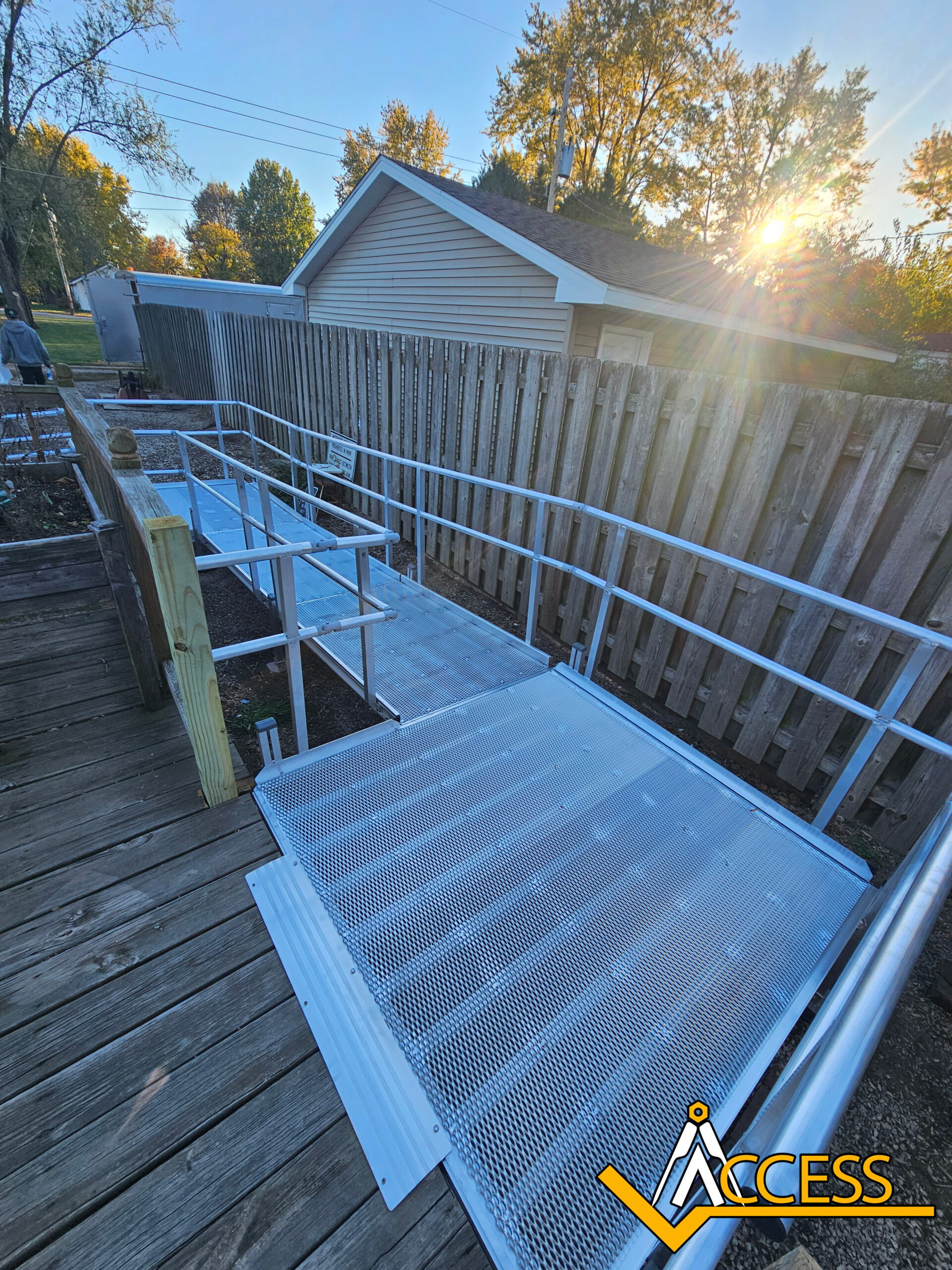
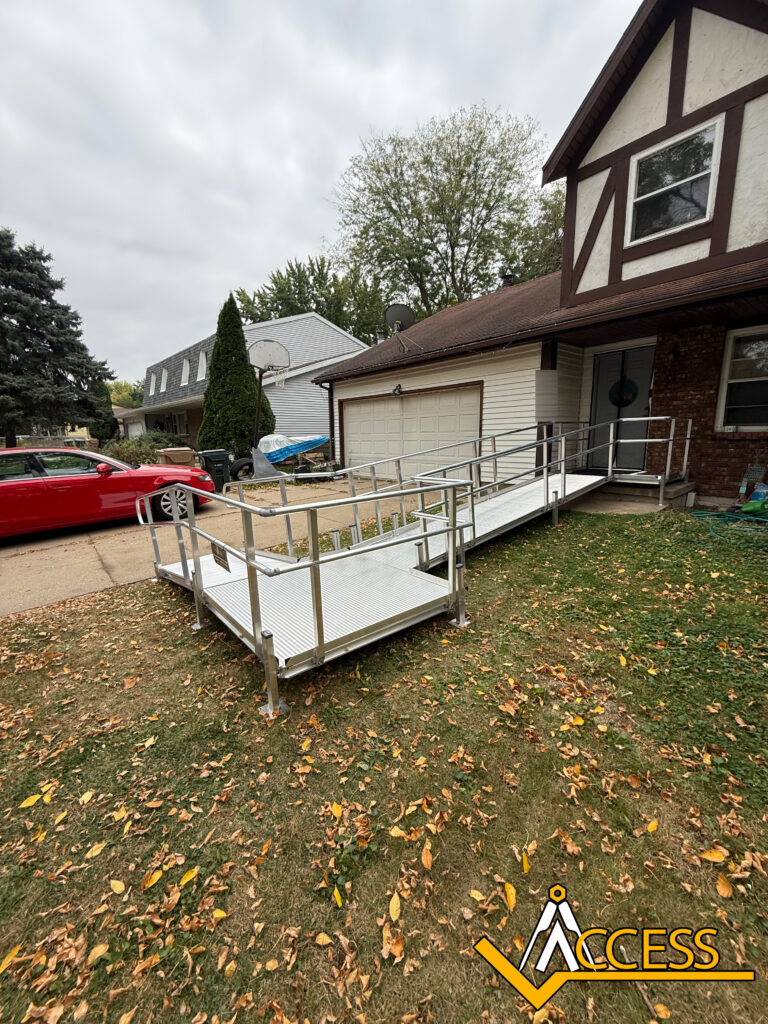
Benefits of a modular aluminum ramp may include:
- Resistance to rust
- Lower corrosion-related maintenance
- Reliable outdoor performance
- Lighter components that are easier to handle
- Sections that can be expanded or reconfigured
- Easier removal and transportation
- Opportunities for reuse
- Long-term recycling potential

Aluminum vs. Steel Wheelchair Ramps
| Consideration | Aluminum Ramp | Steel Ramp |
|---|---|---|
| Rust | Does not develop iron rust | May rust if its protective finish is damaged |
| Corrosion protection | Naturally forms a protective oxide layer | Commonly depends on a coating or treatment |
| Weight | Lightweight | Heavier |
| Maintenance | Generally requires less corrosion-related maintenance | May require rust treatment or refinishing |
| Outdoor performance | Well suited for wet and changing weather | Depends heavily on its finish and maintenance |
| Reconfiguration | Modular systems are commonly adjustable | Possible, but weight and condition may make it more difficult |
| Recycling | Continuously recyclable | Continuously recyclable |
| Residual value | Often retains a higher scrap value per pound | Typically has a lower scrap value per pound |
The exact performance of any ramp depends on its design, engineering, installation, use and maintenance.
The Recycling Value of Aluminum
One important advantage of aluminum is what can happen after a ramp is no longer needed.
Aluminum can be repeatedly recycled without losing the fundamental qualities that make it useful. Producing recycled aluminum requires approximately 5% of the energy needed to produce primary aluminum, according to the Aluminum Association.
Because many aluminum wheelchair ramps are modular, the individual sections may be:
- Removed from the original property
- Expanded or shortened
- Reconfigured for another entrance
- Relocated when a customer moves
- Reused in another installation
- Purchased back when eligible
- Recycled at the end of their useful life
Steel is also continuously recyclable and should not be described as a nonrecyclable material. However, aluminum commonly has a higher recycling value per pound than ordinary carbon steel.
Scrap values change regularly and depend on the location, market, alloy, quantity and condition of the material. Customers should not expect a guaranteed recycling or buyback amount unless they have received a documented offer from the provider.
Think Beyond the Initial Price
A lower initial purchase price does not always mean a lower total cost.
Before choosing a wheelchair ramp, consider:
- How long the ramp will be needed
- How frequently it will be used
- Exposure to snow, salt and moisture
- Routine maintenance expenses
- Potential repair or refinishing costs
- Whether the ramp may need to be expanded
- Whether the ramp may need to be relocated
- Removal and transportation expenses
- Opportunities for reuse or buyback
- Recycling and residual material value
An aluminum ramp may have a higher initial price than some steel alternatives. However, its corrosion resistance, lower maintenance requirements, modular flexibility and potential end-of-use value may make it a stronger long-term investment.
Questions to Ask Before Choosing a Ramp
Before purchasing an accessibility ramp, ask the provider:
- What material is the ramp made from?
- How is the material protected from corrosion?
- What maintenance will be required?
- What happens if the coating becomes scratched?
- Is the ramp designed for the user and their mobility equipment?
- Can the system be expanded or reconfigured?
- Can it be relocated if the user moves?
- Can the components be reused?
- Are removal or buyback options available?
- What happens when the ramp is no longer needed?
- Who will inspect or service the ramp?
- Does the installation meet applicable codes and requirements?
Customers deserve to understand what they are purchasing, how it will perform outdoors and what value may remain after it is no longer needed.
Let Access Elevator Help You Choose
Accessibility ramps are most commonly installed to help wheelchair users safely and independently enter and leave their homes. Because a ramp may serve as someone’s primary entrance, material selection matters.
Steel and aluminum are both recyclable, and a properly protected steel ramp can provide years of service. The key difference is how the two materials respond to outdoor exposure and what they may require throughout their useful lives.
Aluminum’s natural corrosion resistance, lighter weight, modular flexibility, lower maintenance requirements and recycling potential make it a strong long-term choice for many outdoor wheelchair ramps.
Access Elevator, Inc. can evaluate your property, discuss your mobility needs and help you select an accessibility ramp designed for dependable daily use.

Ready to explore your options? Contact Access Elevator, Inc. today for a free evaluation.
Call: 1-844-455-4387
Request a Free Evaluation